
Cricket: Four Recommendations
Or, "Howzat?" you might ask

It should be apparent to regular readers of “Poetic Musings” that my primary goal with every single post is to call your attention to something new to you that you might want to try, even if the suggestions I have for you fall under a category that is mysterious, or off putting, or both.
For example, cricket. I discussed in a recent post C.L.R. James’ Beyond a Boundary, a first-rate book about the effects of life under colonialism. Now, if I’m being completely honest, there’s a lot of cricket in James’ book, and your appreciation may vary depending upon your knowledge of the game. Today I have four recommendations for you where you absolutely, positively need not have any knowledge of cricket at all to be thoroughly entertained. Well, maybe I’m stretching the truth with my fourth suggestion, but I’ll let you be the judge of that.
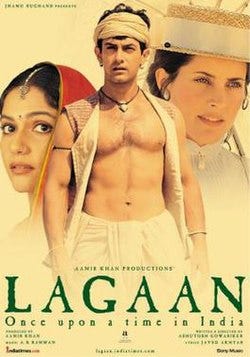
In describing the 2001 Oscar nominated Lagaan: Once Upon a Time in India. Wikipedia calls it an “epic period musical sports drama.” As if that’s not enough genre admixture, I’d throw in “romantic class conflict” as well. All of this should scream Bollywood to you. If you’ve not ever tried a Bollywood film but among your favorite movies are Singing in the Rain and Lawrence of Arabia, then you owe Lagaan a looksee. Yes, there’s a lot of cricket in the film, but the storytelling is so compelling that you will be able to tell when our ragtag band of heroes are succeeding, or on the brink of abject failure. The score, including six songs, is by A.R. Rahman, best known in this country for the Oscar winning song “Jai Ho” from Slumdog Millionaire. The cricket scenes are lengthy, but you won’t care, thanks to the riveting drama. Also, the film itself is lengthy (almost four hours!), but don’t let that put you off. Watch it in two sittings with an intermission if you must, but do watch it. I don’t see it streaming anywhere at the moment, but for my Eastern Massachusetts readers, it’s available via interlibrary loan through the Minuteman Library Network. Or just invite yourself to my house and we’ll watch my copy together. I’m overdue to re-watch it again.
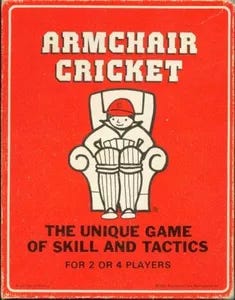
I bought Armchair Cricket, a card game replicating some of the strategy and gameplay of cricket, on my one and only visit to Lord’s Cricket Ground in 1982, and found it to be an intriguing blend of luck and skill, like most high-quality card games. Better yet, the gameplay is unlike most card games you know, so if you would like a change from the trick-taking games you do know, I’ve come up with a modified set of rules such that you can play the game with two standard decks of cards.
Here’s the rules, for two players:
***************
Take two standard decks of cards, but for each of the four suits, you will only use eleven cards (Ace low through ten, plus one of the three royal cards; it doesn’t matter which you choose: whether jack, queen, or king, the card has a value of 11.
Each player has one opportunity to score as many points (runs in cricket) as they can until they have accumulated 10 outs. Each player should cut the deck; high card gets to decide whether to bat first or second.
Shuffle the deck and deal six cards to each player. The player who is the bowler puts out any card. Depending upon the card the batsman plays, one of three things happens. If the card is in the same suit and higher in number, the batsman scores anywhere from 1 to 6 runs. If the card has a value that matches or exceeds the bowler’s card in a different suit, or is in the same suit as the bowler’s card but equal or lower in number, neither a run nor an out is recorded. If the batter is forced to play a card lower than the bowler’s card, but in a different suit, the batter is considered to be out (but keeps batting until they are out 10 times). Carefully record all runs and outs so you know the batting team’s total score, and when they have to stop batting because they have recorded 10 outs. Take all cards played and create a discard pile.
Here’s how to determine the number of runs the batter scores on a scoring play:
Batter’s card exceeds bowler’s card by 1,2, or 3 1 run
Batter’s card exceeds bowler’s card by 4 or 5 2 runs
Batter’s card exceeds bowler’s card by 6 3 runs
Batter’s card exceeds bowler’s card by 7, 8, or 9 4 runs
Batter’s card exceeds bowler’s card by 10 6 runs
Every time the bowler and batter play a card, they immediately draw another one from the dack. Any time the batter is out, they can replace up to two cards in their hand by discarding them and drawing new ones.
When you get to the bottom of the deck, shuffle the discard pile and turn it face down to start a new deck.
When the batter is finally out ten times, the players switch roles. Shuffle all the cards and begin again as above with the new batter and bowler.
Should the second batter exceed the first batter’s score before recording ten outs, the second batter is the winner; otherwise the first batter is the winner.
***************
If you try the game and have any questions about the rules, use the comment section at the end of this post and I’ll answer your questions.
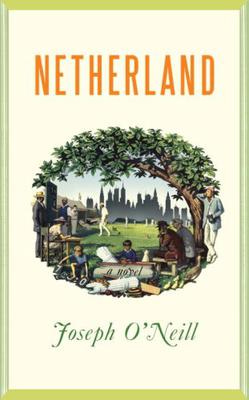
After reading my post on sports books, a reader reached out to me to recommend this novel. I read Netherland back when it first came out in 2008, both because it was well-reviewed, and because it involved cricket (a big plus for me!). I enjoyed the book without absolutely loving it, probably because cricket played a smaller role than I would have liked. The novel is set in New York City in the aftermath of 9/11, and touches on immigration, class, shady business dealings, romance, and yes, cricket (shades of Lagaan). The closest parallel to a book you’re familiar with is The Great Gatsby, so for a 21st century variant on Fitzgerald’s story, give Netherland a try.
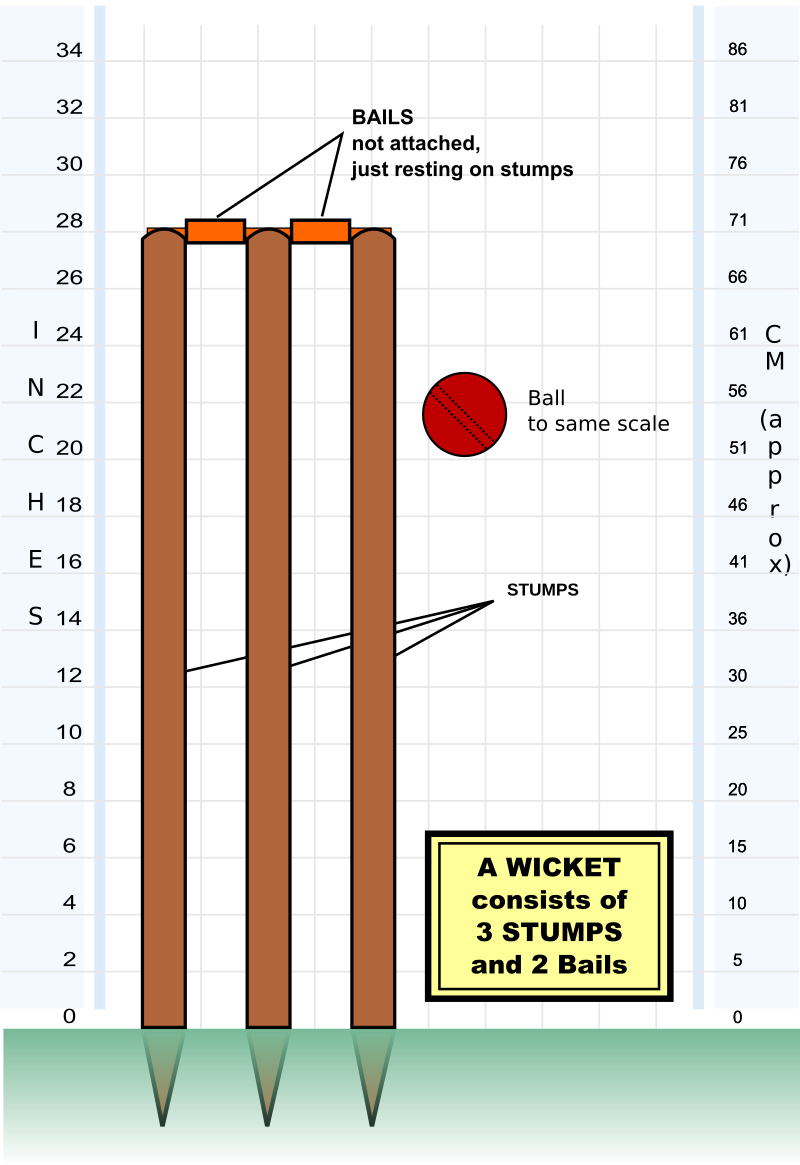
Finally, just to give you a flavor of what test cricket (5 day games between national teams) feels like, check out a little of the video below. If you are truly curious about the rules of cricket, challenge yourself as I did at Lord’s back in 1982 to figure out the basic rules over the course of watching. I’ll throw one rule at you to get you started. Two batters bat at the same time and a batter is not considered to be out unless a.) the bowler dislodges the bail on the wicket behind them, b.) the defense dislodges the bail on the wicket that the batter is running towards, or c.) the defense catches the ball in the air. Given that first-rate batsmen are excellent at defending the wicket behind them, that they also are skilled at avoiding routine fly balls, and most importantly, that they don’t have to run to the next wicket unless they feel they can make it, some batsmen can manage to bat all day long and score a hundred or more runs. Wouldn’t you have enjoyed seeing David Ortiz get to hit a couple of hundred balls in a game rather than 3 or 4? If you’re not really interested in figuring out the rules of cricket, at least tune in for a while to experience what it’s like to spend a beautiful day on Barbados watching cricket, and also how the announcers handle the challenge of broadcasting a match that far exceeds anything you’ non-cricket sports fans have ever experienced.