
Poetry in Conversation
Possibilities for a Poetry Club

Like many of you, I’m a book club member, and enjoy all aspects of bookclubdom: Deciding the next book, reading it, and coming together with others in camaraderie to talk about it. Book clubs are everywhere, some with histories going back decades, some with waiting lists to get in. My question for today however is this: Why aren’t there nearly as many Poetry Clubs that one can join and enjoy? It takes only one or two conversations with others about the merits of a particular poem before you start questioning the premise of a book club. How can any book worth reading be fruitfully addressed by any size group in 60-90 minutes when a poetry close reading might use the same amount of time to discuss a sonnet? Perhaps the obvious answer is the different purpose a novel serves than a poem. Yes, a book club can make some progress in discussing characters, setting, plot, and themes, but it would be hard pressed to open the book to one random page and analyze it closely, although I would argue that a well-written novel would merit such a page-by-page reading.
Anyway, here I want to present a different set of ideas. Let’s assume you are sold on the idea of a poetry club precisely since it allows you, indeed begs for you, to read closely. My question is: What might the format of such a club be? Book clubs are pretty standard. Everyone reads the specific book (or not, but that’s another topic) and then comes together to discuss it as a whole. WIth poetry, the possibilities are intriguingly varied. Here’s some ideas:
Read one poem closely
I’m an organizer of a gathering that at different times I’ve referred to as a group, a salon,and a get-together, but should just come right out and call a Poetry Club. Many of the formats I’ll outline here we’ve tried. Our next meeting is an example of my favorite. We’ll all read ahead of time Frank O’Hara’s Why I Am Not a Painter (another big difference from a book club? O’Hara’s poem is one page long, so no one has an excuse for not doing the reading). Then we’ll meet and talk about it, possibly on a line-by-line basis. For those of you who have never been part of such a discussion, you’ll have to trust me that even without any particular expertise in O’Hara, in poetic form, or even in poetry in general, your group will be able to profitably sustain a conversation for at least an hour. If you’re not so sure, then…
Read two poems closely
Here, you have plenty of variants. You can read two O’Hara poems. You can read another poem that looks at art via poetry, such as W,H. Auden’s “Musée des Beaux Arts." You can have a different member of your group than the one who thought O’Hara was hot stutt select the second poem. Either way, please be cautioned: The second poem you choose to discuss is often left holding the short end of the stick.
Read a complete book of poetry
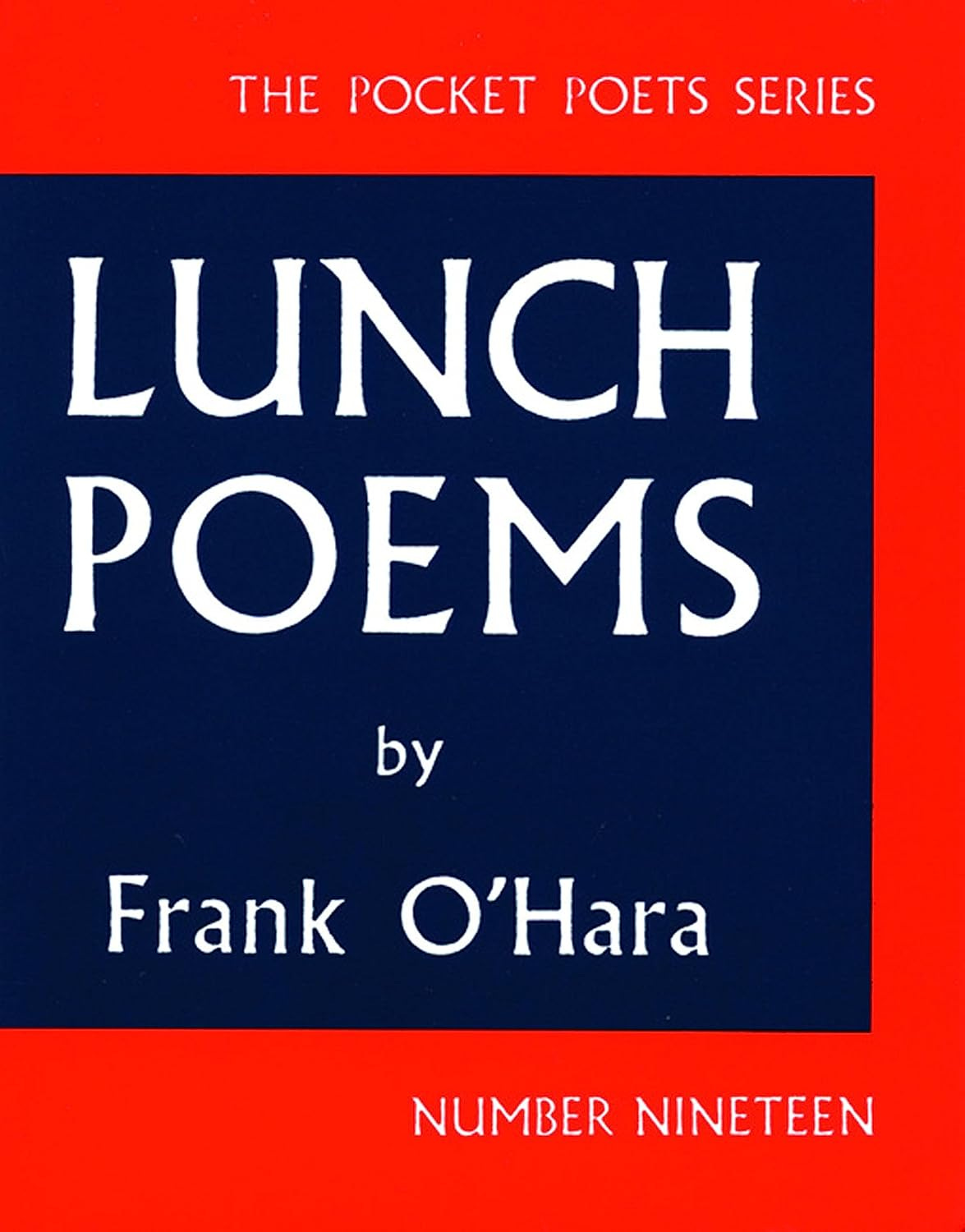
This is an appealing option for a number of reasons. For example, if the book you decide to tackle is O’Hara’s Lunch Poems, then you’ll be reading a collection selected by O’Hara with some sort of recurring idea, in this case a series of poems inspired by lunchtime jaunts in New York City. If your club intends to read the book in advance, you have a good excuse to buy yourself a copy, and rather than regretting that a slim book of poetry costs more per page than a novel, recognize that you are likely to reread the book again and again far more than you are likely to reread that novel, especially if your club discussion enhances your appreciation for the poet. If your club doesn’t intend to read the book in advance, then…
Read the book at your meeting
I’ve tried this format with Louise Gluck’s The WIld Iris by reading it outdoors over the course of two meetings. The club members take turns reading Gluck’s poems in order; the collection is short enough that you can read half of it and still have time for some discussion. Reading poems aloud and hearing others read them aloud can have an incantatory effect and almost subliminally increase your appreciation for the poet.
Include biographical details or other background
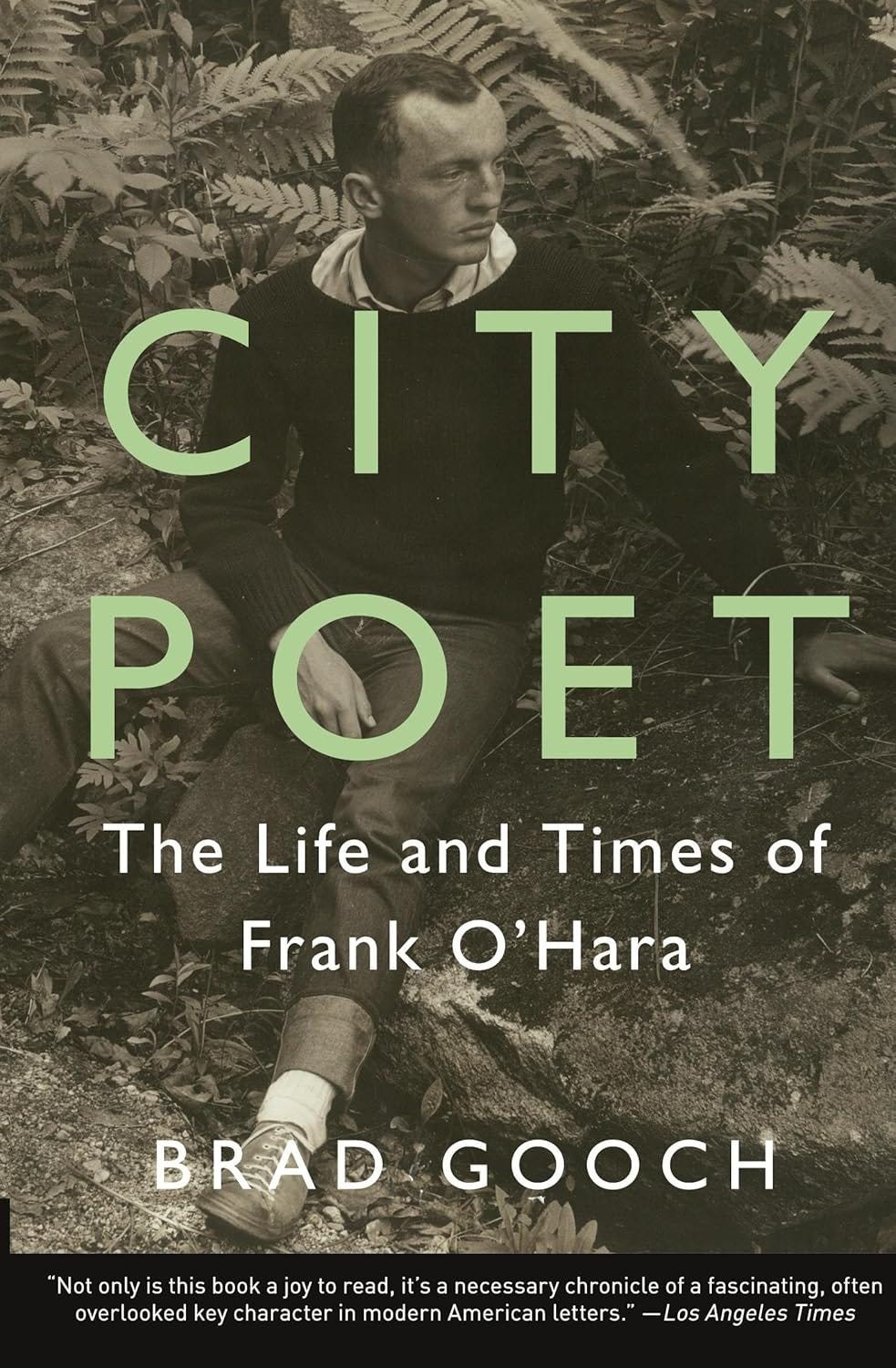
The idea here is that a Club member (rotate this duty among those who are interested) takes the lead in presenting material related to the poem, poems, or collection. For example, I might lead the discussion of Why I Am Not a Painter by reading in advance Brad Gooch’s O’Hara biography City Poet, and leading with or adding interesting biographical tidbits along the way. Or I might gather the club around my TV and show them PBS’s Poetry In America episode about O’Hara and use what we learn together to fuel our discussion. Or I might provide some background on autobiographical poems, or ars poetica (poems about poetry) both of which O’Hara’s poem is. For this format to work, you would need members ready to do some heavy lifting, but if your group consists of poetry lovers, and if each member leads 1-2 meetings a year, my guess is they would do the work for the opportunity of sharing their particular enthusiasms.
Have each member bring one poem to share
I’ve tried this format with small groups (2-3 members; I’d argue that even two people coming together to talk about poetry is worth your time). Everyone brings a poem, plus copies for everyone else, recites it, and solicits impressions of it from the others. I like the variety of poems you encounter with this format, even if it feels like you are shortchanging the discussion of each one.
There are doubtless other formats (please add one to the comment section below if you are so inspired), plus there’s the obvious idea that you can mix and match these formats, with someone in charge each month of deciding what the group will do. I’m planning for the next meeting of my group to talk about one poem and then open the floor for discussion about how we may choose to go forward. Perhaps we’ll even agree to call ourselves a Poetry Club!