
The Life Of...
Notes on Stephen King

Somewhere before the end of this Musing, I’ll talk about why I highly recommend you see the recent movie The Life of Chuck, based on a novella (or is it a short story?) by Stephen King. But since it seems I’m incapable of staying on topic, I’ll riff on Stephen King for awhile and then get down to business.
Lat month, prior to the awarding of the Nobel Prize for Literature for 2025, I checked in online at the betting odds for various authors and was surprised to see Stephen King listed at 50-1 (surprised that his odds were so favorable, that is). I made one effort about twenty years ago to tackle a King novel, The Stand, intrigued by its post-apocalyptic theme and its daunting length (regular readers of these Musings know I love long novels), but found the writing to be pedestrian at best and gave up in the first fifty pages. My fondest memory of King prior to 2000 was his appearance on Jeopardy in 1995 (see above) where he played on behalf of the Bangor, Maine, public library.
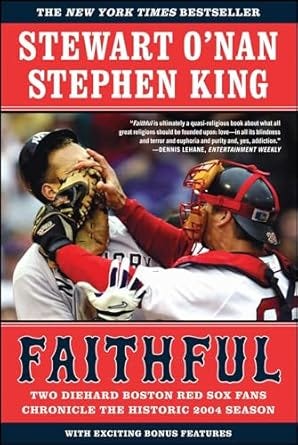
If you’d talked to me a couple of years ago, the only two King titles I’d read from cover to cover, each of which I liked, were his guide to writing, appropriately enough entitled On Writing, and his book Faithful, co-authored with novelist Stewart O’Nan, a diary of the magical 2004 Boston Red Sox season. What I vaguely remember reading either in On Writing or at about the same time, is that following an automobile accident where King was severely injured, he considered ending his writing career. He’s written about thirty books since, one of which I decided to try a few years ago.
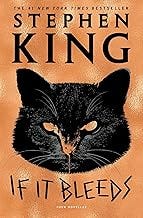
If It Bleeds contains four different stories of varying length, three of which I liked very much, including the final story, “Rat,” which received generally mixed reviews. The title story features recurring King character Holly Gibney, played memorably by the amazingly versatile Cynthia Erivo in an HBO miniseries The Outsider.
The story which kicks off the collection, Mr. Harrigan’s Phone, is centered around a cellphone, presented as a gift to the elderly Mr.Harrigan by a young friend. Harrigan, dies, the cellphone is buried with him, and from there, you can almost guess the Stephen King-like developments to come. A film version (how many King works have been adapted as films? I asked AI; its answer? over 50) is on Netflix with the late great Donald Sutherland:
The fourth story in If It Bleeds may be my favorite short story ever, with both a premise and an execution that sucked me in and wouldn’t let go. The Life of Chuck is in three sections, beginning with the end of Chuck’s life, continuing with a memorable incident in Chuck’s late 30’s, and ending with an extended look at Chuck as a young man at various stages.
At its heart, The Life of Chuck is King’s elaboration of ideas behind this famous section of Walt Whitman’s Leaves of Grass:
The past and present wilt—I have fill’d them, emptied them.
And proceed to fill my next fold of the future.Listener up there! what have you to confide to me?
Look in my face while I snuff the sidle of evening,
(Talk honestly, no one else hears you, and I stay only a minute longer.)Do I contradict myself?
Very well then I contradict myself,
(I am large, I contain multitudes.)I concentrate toward them that are nigh, I wait on the door-slab.
Who has done his day’s work? who will soonest be through with his supper?
Who wishes to walk with me?Will you speak before I am gone? will you prove already too late?
Now The Life of Chuck is a rapturously life-affirming movie (about death!), directed by Mike Flanagan. The film includes two extended dance sequences, one of which features Loki himself, Tom Hiddleston. To give you an idea about how obsessed I am by this story, I’ve read it in If It Bleeds, went to see it on film, re-read the story in a new version of the book where you can see the Chuck/Hiddleston dance in flip-book format, watched the film again on DVD, and watched it still again with the Mike Flanagan commentary, which outlines all the links between the three sections of the story.
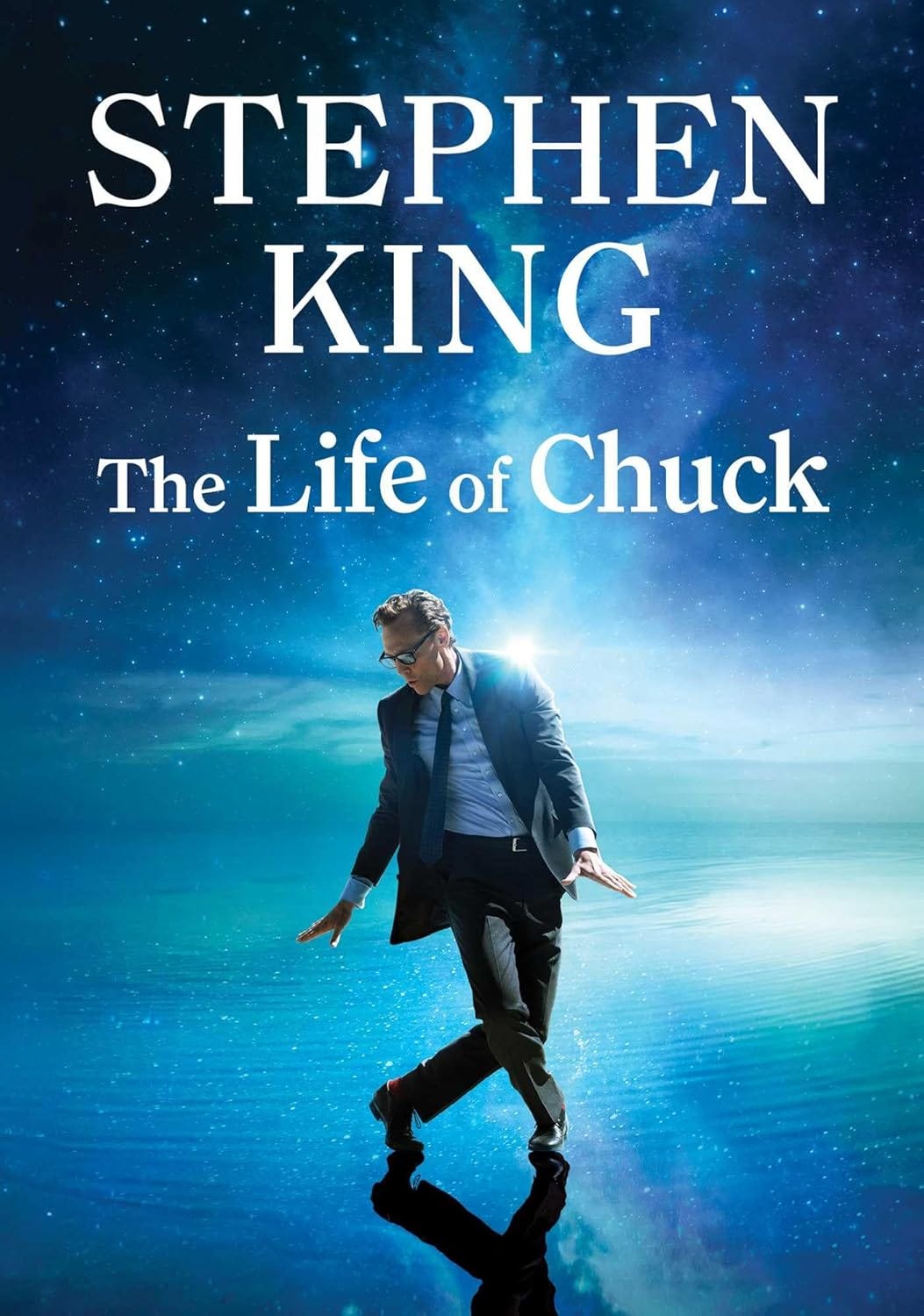
I will admit that The Life of Chuck is a puzzle you need to solve, but neither King nor Flanagan makes solving it too difficult, so if you don’t know the story and want to be both challenged and totally surprised, stop reading this Musing right now. But I would argue that there is also some benefit to knowing the concept before you see the film, so in my next (and final) paragraph, I’m including spoilers. You decide whether to keep reading.
In the first part of both book and film (called Act 3), we see simultaneously the death of Chuck and the end of the universe. But this is no total apocalypse. Instead, since everything we think, everything we experience from birth to death, is its own universe (“I contain multitudes”), the death of one person brings that universe to a close. Every character, prop, line of dialogue in this first Chuck-less part of the film we then see in some form or another during the later parts of the film that show us Chuck’s life. By the very end of the film, when we once again witness Chuck’s death, we’ve come to totally appreciate the richness of any human life, including our own. For this, Stephen King, many thanks.
I haven't read many of Stephen King's books, of the few I have read, my favorite is The Girl Who Loved Tom Gordon, as a Sox fan it is pretty magical.