
Who Will Buy?
Books and the contemporary marketplace

Like most voracious readers, occasionally I entertain the idea of writing a book of my own. It’s still not likely to happen; indeed I’m beginning to think of my collected Substack posts (soon to number 100) as the rough equivalent to a book. When I do allow myself to dream of being a published author, my imagination gravitates to a particular topic and toward a distinct style of writing.
The topic, to be overly general, is books, not so much the content of books but, given our world of interlibrary loans, Little Free Libraries, and Amazon, the changes in recent years to book buying patterns. The style of writing I favor, which is consistent with the flavor of these Poetic Musings, is the random thought, generally expressed in single paragraphs, where the direction I travel from paragraph to paragraph can appear random, but generally develops thematic threads. I’d like to feel there’s an overall argument I’d be making, but I prefer to let the reader assemble the pieces. Unlike much writing, which develops one big idea, I’d like to think that each paragraph might be thought-provoking on its own, and expose you to more meaty ideas per page.
Let’s try out this style of writing on the topic of the book marketplace:
Chris Anderson is most famous as the writer of The Long Tail: Why the Future of Business is Selling Less of More. His idea is that the internet allows for the sale of products to niche marketplaces such that all those small sales can match or exceed the sales of mainstream “hits.” I’ve not re-read the book recently, so I don’t remember if he discussed this idea: Would the price of these niche purchases be higher because the buyer really wants this unusual product, or would it be lower because there’s not really any overall demand for it?
When I was younger, most of my book purchases went like this: I became aware, usually due to a book review, of a particular book I wanted to own, went to a store, and bought it. Or I went to a used book store, looked at books on a topic I enjoyed (today, that would usually be poetry) and bought one if the combination of a relatively low price and a compelling subject matter won me over. Today, my most common book purchasing experience by far is to check out a seasonal or all-the-time library book sale and spend between 25 cents (8 dollars for a bag of books; 32 books is a comfortable fit) and two dollars.
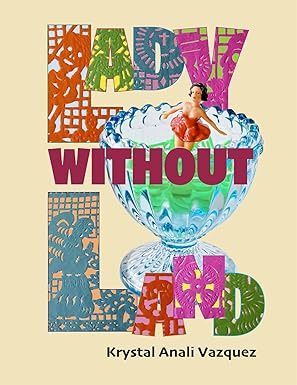
Three different times during a session at the Boston Book Festival I picked up a copy of Krystal Anali Vazquez’s Lady Without Land, an autobiographical novel in vignettes which presents life moments spun off from specific works of literature on the left-hand page and drink recipes on the right-hand page. I resisted the temptation to buy it, knowing I wanted to purchase at least two poetry books later that day, but did note down the title and author so that I could maybe borrow it from my library. Alas, even with the sizable library network my library belongs to, there were no copies on the shelf. Just to check, I visited Amazon (boo!), where new copies of the book were on sale for 85% off ($3.44 instead of $22.95). So now I own it.
One concept that plays much less a part of my life than in the past is the remaindered book. I would ride the down escalator of price with certain books, not buying the new hardcover, not buying the new lower-priced paperback, not buying the marginally lower remaindered hardcover, and finally stopping at the remaindered paperback. Yet today, even that remaindered paperback price (generally in the $5.99 to $10.99 range) feels like too much to spend on a book that I didn’t choose to buy at the other three stops on the escalator.

Yes, I used to buy books conscious of how they furnish a room. I took pride that the books on my bookshelf reflected the vastness and sophistication of my taste. But now I’m in downsizing mode. For a full year, I found one book per day on one of my bookshelves and put it in the Little Free Library for which I’m the steward. Now, I’m limiting all my full-price purchases for the most part to books I imagine I might re-read (once again, usually poetry). Knowing that some? many? most? younger people are either reading digitally or not at all, it seems that we’ve gone from a time when people were buying books to a time when they are giving them away. Two decades ago, I might have held a yard sale; today even a quarter feels like too high a price to ask for a book.
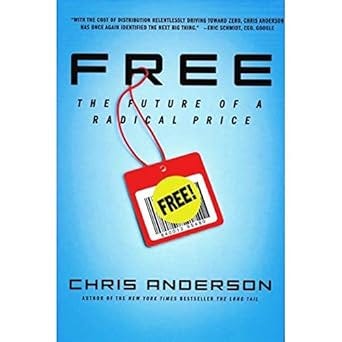
Chris Anderson also is the author of Free: The Future of a Radical Price, where for a few pages he considers the price of books. When I buy books today, it’s either because I want to support my independent bookstore, where I can browse and attend events for free, or support my library, which seems like they can get some benefit from the dollar or two I spend every week.
Here’s some numbers: I’m on the verge of finishing my 100th book of the year (I know, I know; I should get a life), which is convenient for calculating percentages of book per source. Here’s where I acquired those 100 books:
Local Public Library: 25%
Little Free Libraries: 25%
Interlibrary Loans: 15%
Used: 12%
Off My Bookshelf: 10%
Purchased (Full Price): 8%
Remaindered: 3%
Gift: 2%
Here’s another number: Total money spent by me on those 100 books: $237, or $2.37 per book. With numbers this low, perhaps free is the ideal price point for books. But if so, what about the viability of independent bookstores? And how can authors make a living?
Worth noting: I may be a modern-day outlier in that none of the 100 books I’ve read this year are either an eBook or an audiobook. Since the former are available in libraries and the latter on platforms such as Spotify, it’s not like my spending on books would increase by much if I was a digital or audio reader.
Whether it’s at used book sales, at Little Free Libraries, or at library “Recommended By Staff” shelves, clearly I’m open to serendipity when it comes to my reading. I would guess I’m exposed to a a few hundred titles per week that I haven’t actively sought out; from those hundred, it’s pretty easy to come away with at least one book a week at little or no cost that I acquire and read.
As always, I invite you to comment on your book purchasing evolution in the Comments section.